Search intent
A practical workflow, not a shortcut around customer trust.
PublishMyReviews syncs your Google reviews into one place, drafts a reply to every one, and turns the best into Instagram posts and WhatsApp-ready stories. You approve everything. A branded QR page sends customers to Google to leave the review in the first place.
Why replying to Google reviews matters
A reply is public. When a future customer reads your reviews, they also read how you respond — a thoughtful reply to praise shows warmth, and a calm, useful reply to criticism shows you take service seriously. Businesses that reply consistently look more present and more trustworthy than identical businesses that leave reviews unanswered. Google has also said that responding to reviews is good practice for engagement. The problem is never knowing you should reply — it is finding the time to do it well, for every review, every week.
How AI-drafted replies work
PublishMyReviews reads each synced review and drafts a reply in your voice — acknowledging what the customer actually said rather than pasting a generic 'Thank you for your feedback.' A five-star review about a specific stylist gets a reply that mentions the service; a three-star review about a wait time gets a calm, specific response. You are never starting from a blank box, which is the real reason replies pile up.
You approve every reply
AI drafts; you decide. By default every reply waits for your approval before it posts to Google, and you can edit any draft first — the drafting removes the effort, not your control. Prefer hands-off? On our Pro plan, an Actions rule can auto-reply for you, with an AI safety check — and it only runs automatically because you deliberately switched it on.
Replying to negative reviews
A calm, specific reply to a critical review is often more persuasive to future customers than the complaint itself — it shows you listen and act. AI drafts a measured first response you can adjust; the goal is never to argue, but to acknowledge, take it offline where needed, and show the next reader you handle problems well. We never hide, filter, or gate a bad review — replying well is the honest alternative.
Keep every reply in your voice
Generic replies read as generic. The drafts match your tone — warm, plain, and specific to your business — so a customer feels a real person answered. Over time the inbox becomes a few minutes of reading and approving, not an evening of logging into Google and writing from scratch.
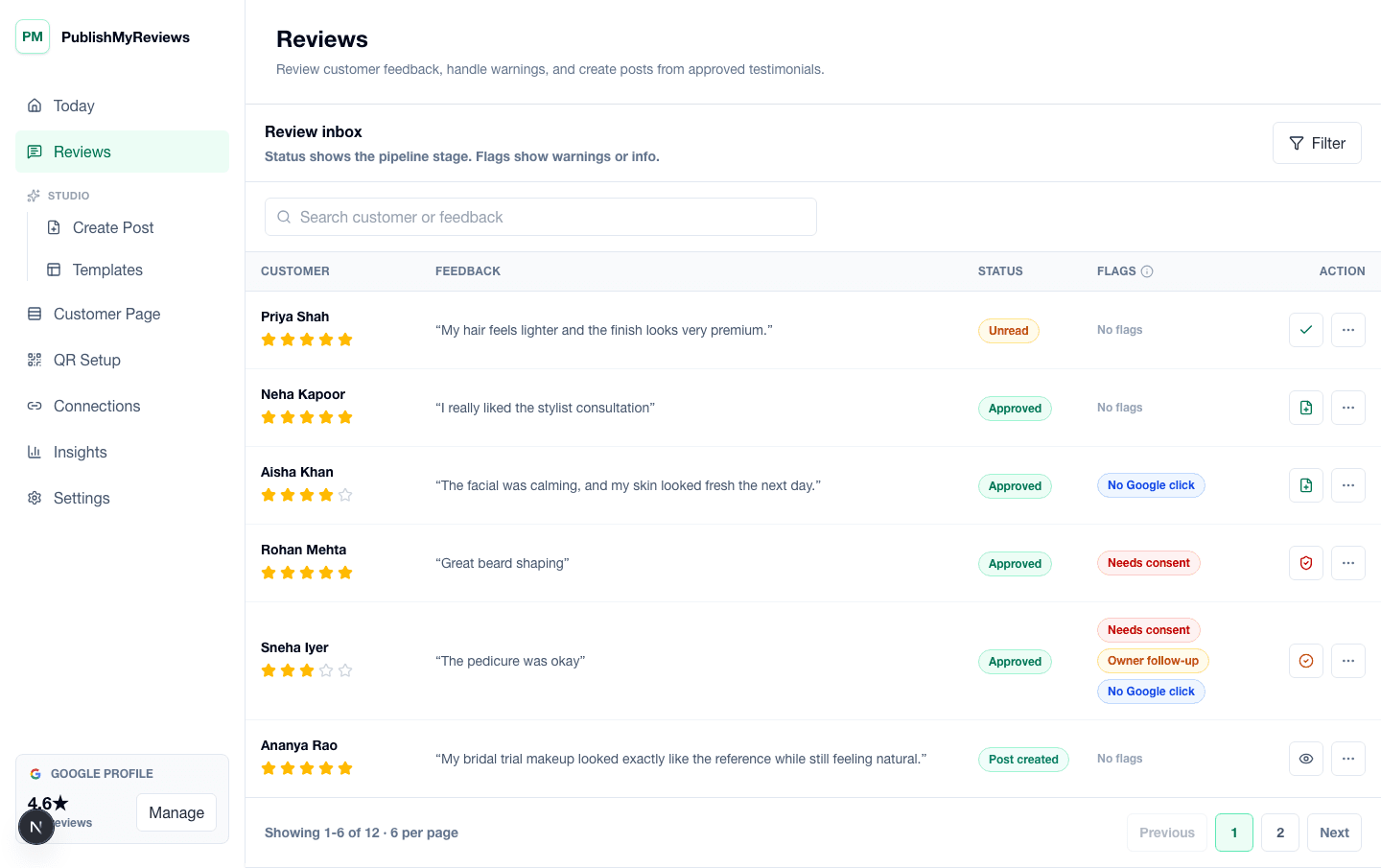
One inbox, nothing missed
Reviews scattered across the Google dashboard are easy to miss, and the ones that slip are usually the ones that most needed a reply. Syncing every review into one inbox — with a draft already waiting — is what turns 'we should reply to reviews' into something that actually happens for every review.